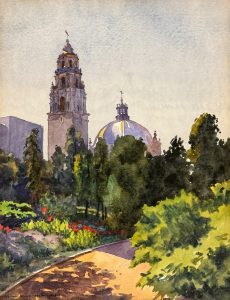

Julian Clarence Levi
Julian Clarence Levi’s life unfolded against the backdrop of a rapidly changing America. Born in New York City in 1874, Levi grew up surrounded by the city’s energy and promise. After graduating from Columbia College in 1896, he traveled to Paris to study at the prestigious École des Beaux-Arts, immersing himself in the classical traditions that would shape his architectural vision.
Returning to New York in 1905, Levi quickly established himself as a talented architect, joining the firm of Francis H. Kimball before co-founding Taylor & Levi with Alfredo S.G. Taylor. For nearly fifty years, their partnership produced elegant residences and public buildings across New York, New Jersey, Virginia, and New England, leaving a lasting imprint on communities like Norfolk, Connecticut. Levi’s designs were celebrated for their refined blend of classical proportion and modern sensibility.
Levi’s influence extended far beyond his architectural practice. He played a vital role in organizing international exhibitions, helped reconstruct schools in postwar France, and co-designed the U.S. Pavilion at the 1937 Paris International Exhibition. During the Great Depression, he founded the Architects Emergency Committee, creating opportunities for architects in difficult times. As president of the Architectural League of New York and an active member of the American Institute of Architects, Levi championed the profession and represented the United States at international congresses, earning honors from the French government for his work on the restoration of Chartres Cathedral.
In addition to his architectural achievements, Levi was an accomplished watercolorist, painting seascapes and landscapes with the same meticulous attention to detail that defined his buildings. His works are now part of the collections at the Metropolitan Museum of Art and the Cooper Hewitt.
Levi is significant for his dual legacy as both a master architect and a gifted artist, and for his leadership in advancing the profession and supporting public service. His unique contribution was his ability to seamlessly integrate classical tradition with modern needs, enriching both the built environment and the cultural landscape of his era. Julian Clarence Levi’s life stands as a testament to creativity, civic engagement, and the enduring power of thoughtful design.
You can find Julian Clarence Levi’s work in several prominent collections and archives:
The Metropolitan Museum of Art (New York): The Met holds watercolor paintings by Levi, such as “Interior of Church, Sienna” and “Capella Palatina, Palermo.” While these works are not always on public view, they are part of the museum’s permanent collection and can be explored in detail through the Met’s online catalog.
Cooper Hewitt, Smithsonian Design Museum (New York): Levi’s watercolors and design works are included in the Cooper Hewitt’s collection, reflecting his dual legacy as both architect and artist.
Avery Architectural and Fine Arts Library, Columbia University: Columbia University holds an extensive archive of Levi’s work, including over 250 watercolor paintings, architectural drawings, project photographs, and personal papers. This collection is available to researchers by appointment and provides a comprehensive resource for studying both his art and architectural projects.
Art Market and Private Collections: Levi’s watercolors and prints occasionally appear for sale through art dealers and auction platforms such as 1stDibs, where you can find works like “Western Mountain Landscape” and other mid-century watercolors.
Legacy Donations: Levi also donated works to other institutions, including the Brooklyn Museum, and his art and collections have been dispersed through philanthropic gifts to museums and universities